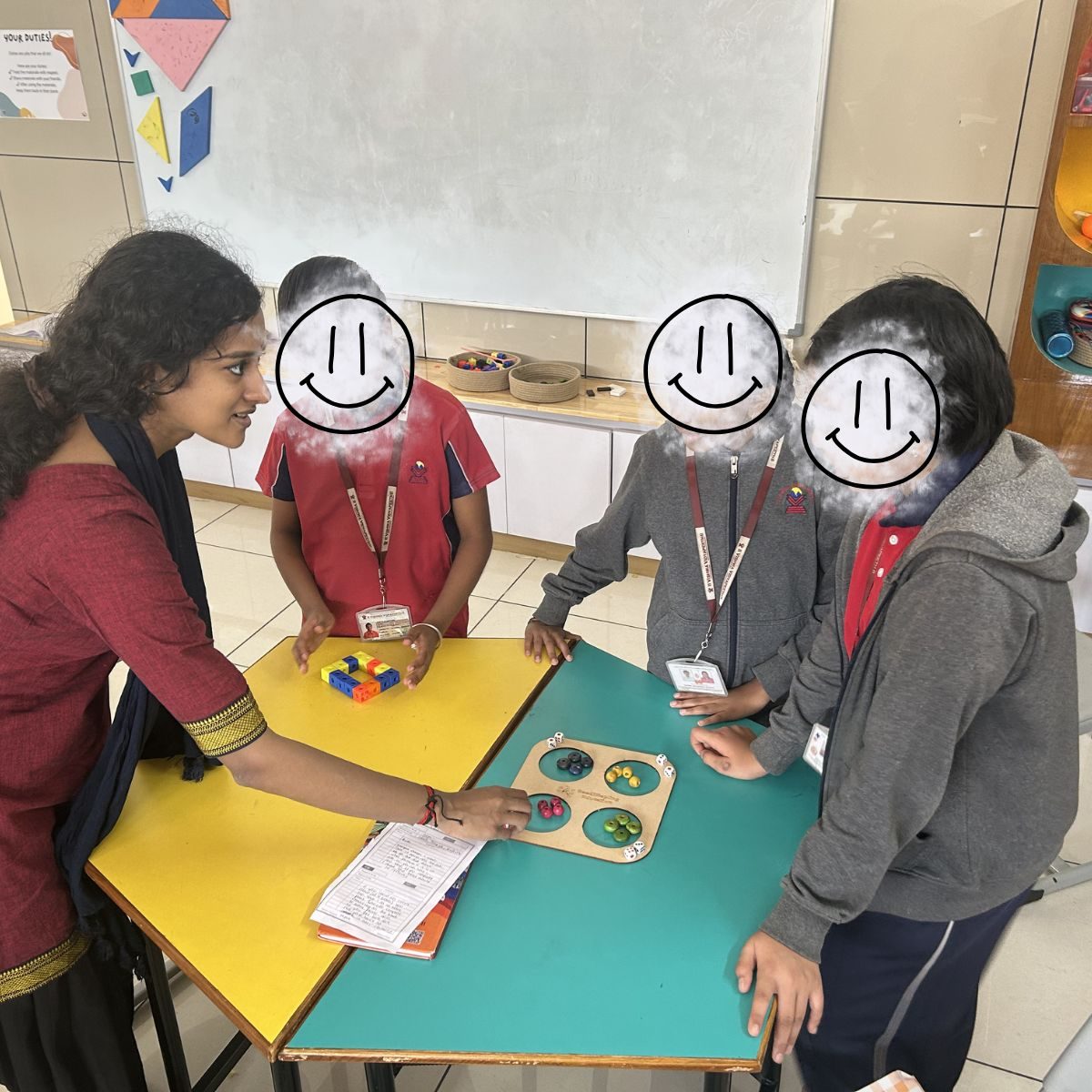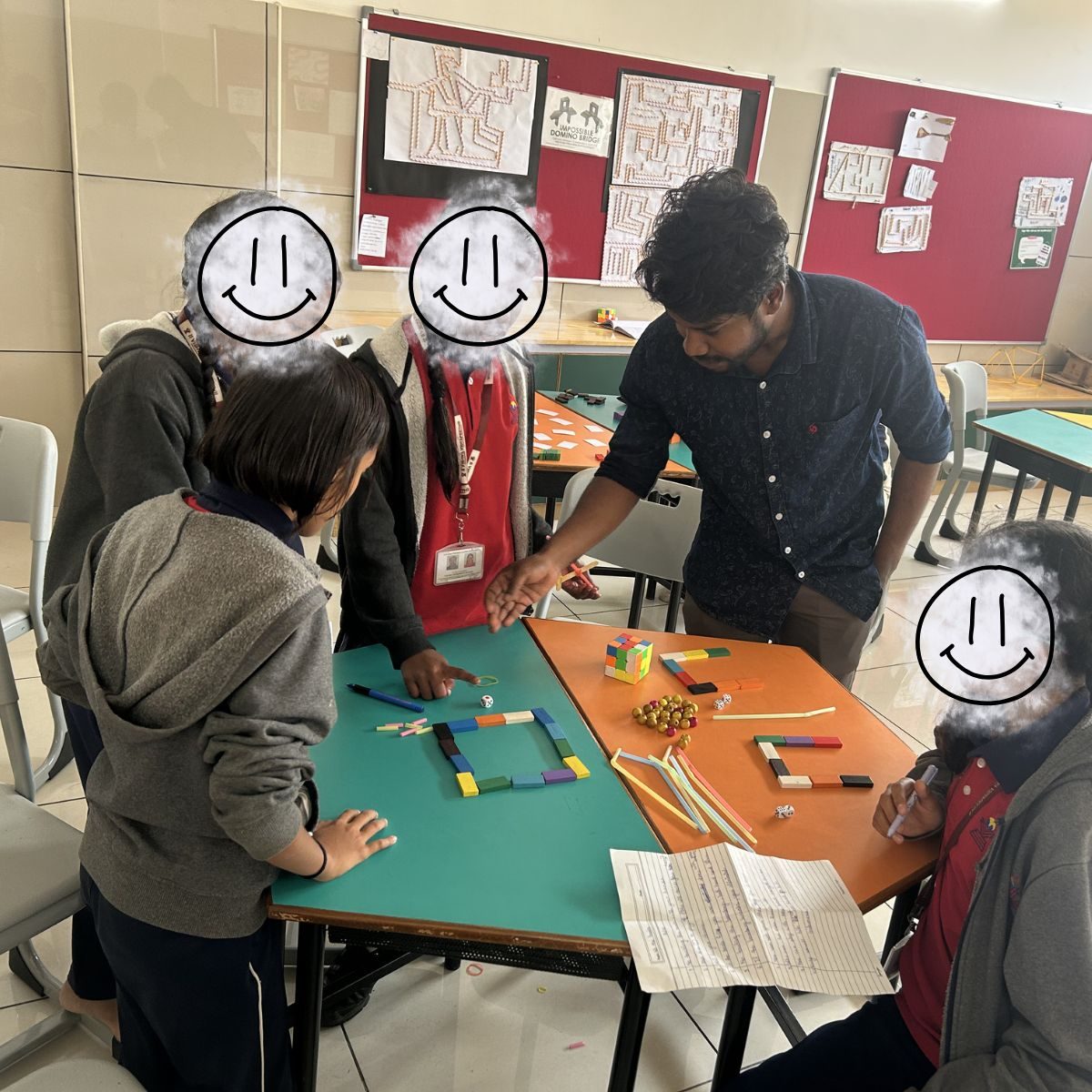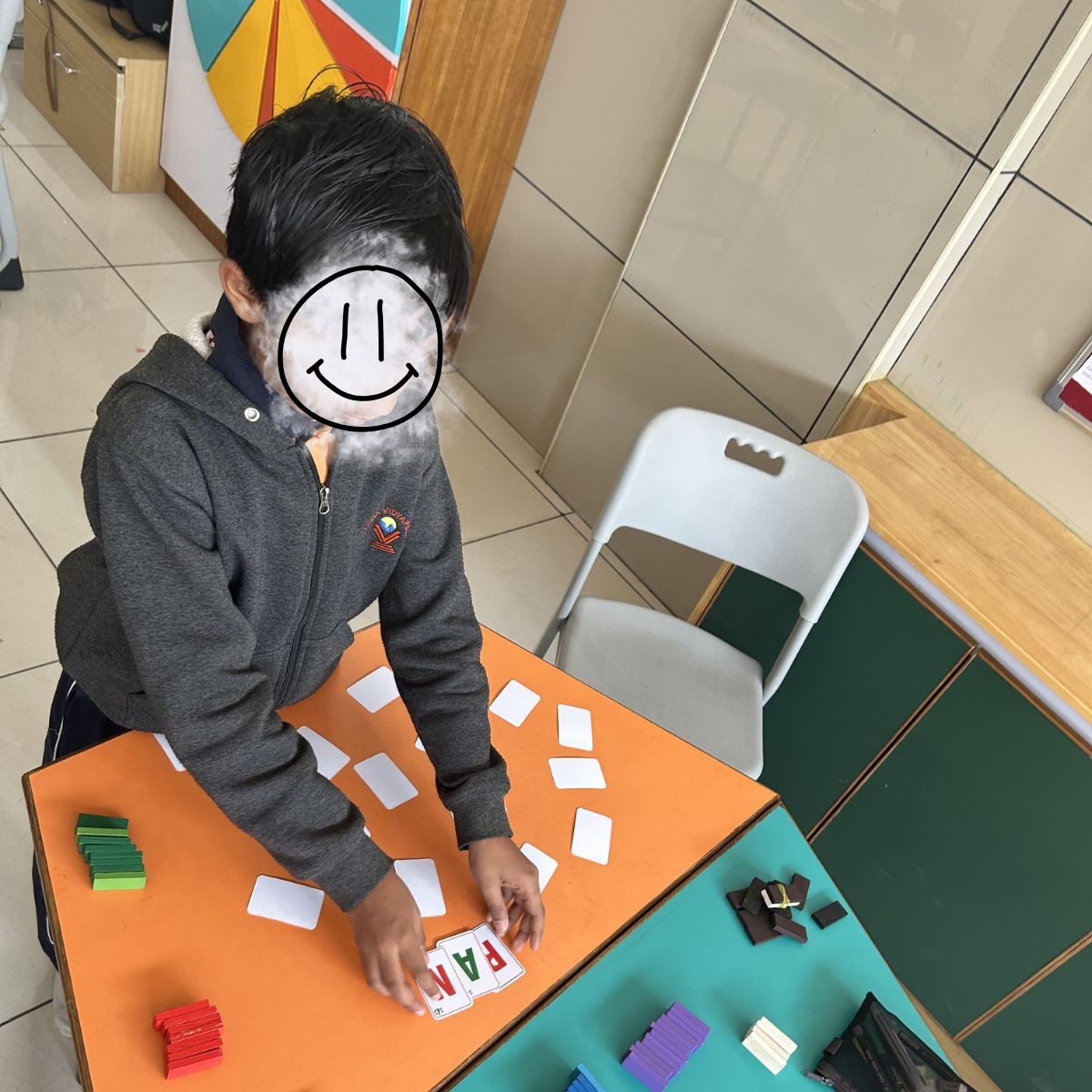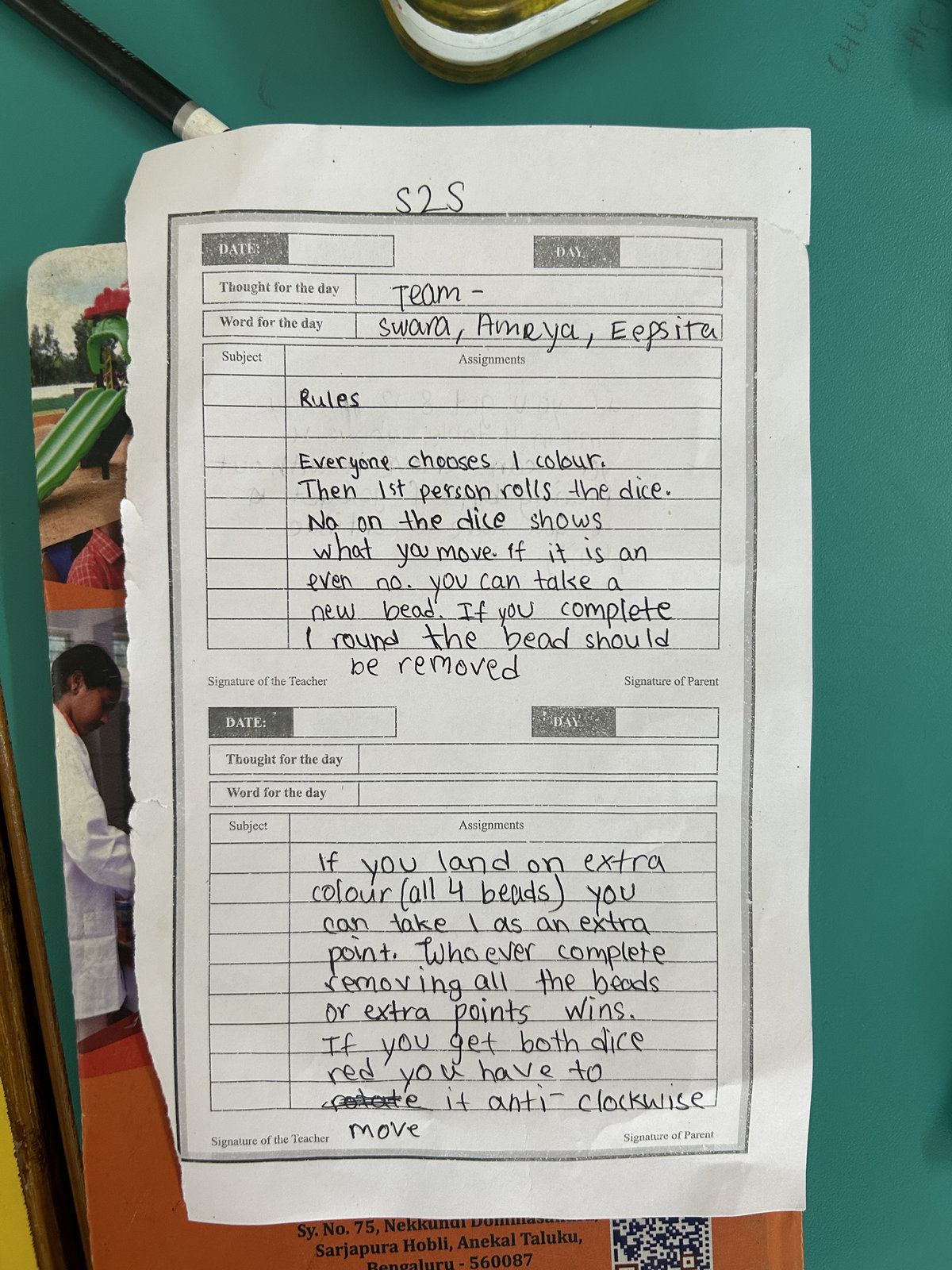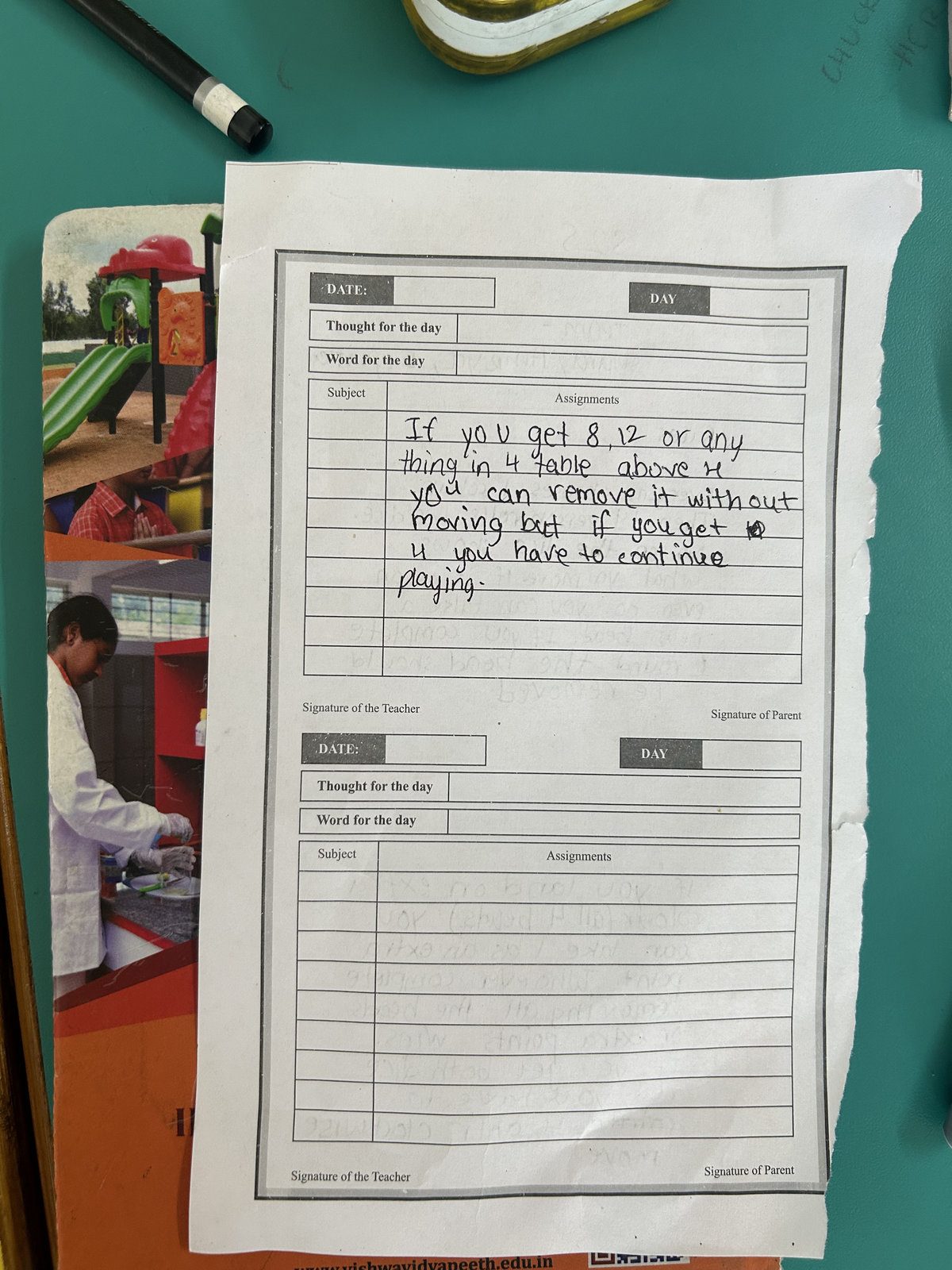
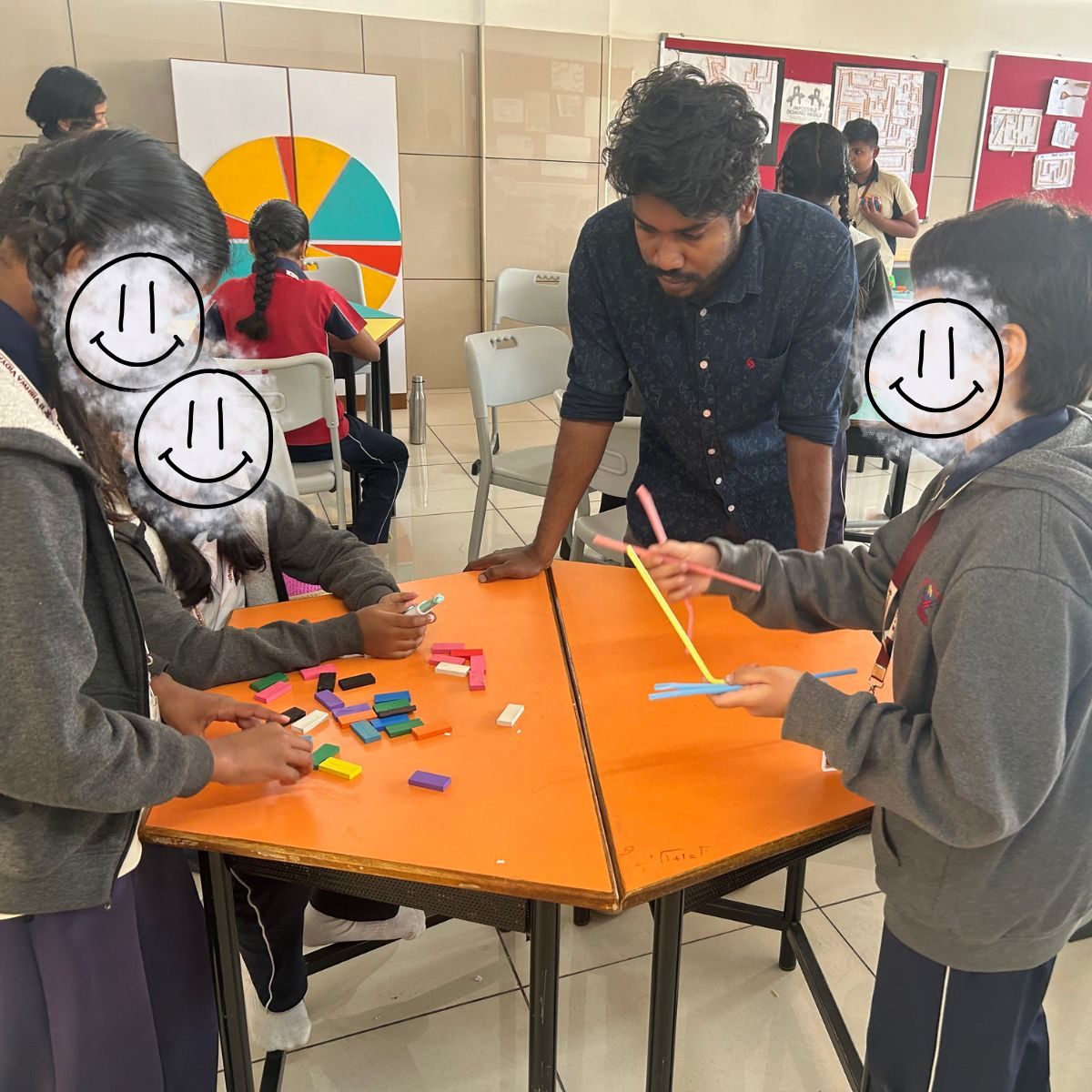
During one of our Math Lab sessions at a school, students had spent the hour designing their own games from scratch, using beads, dice, dominos, and whatever else they could find in the lab. By the end, every team was eager to show off what they had made, calling out to each other's groups to come try theirs.
In the middle of all this excitement, one child walked up to me with a question that caught me off guard: ”Whose game did you like the best?”
"Whose game did you like the best?"
Oh, the inevitable question from a student shows up again! As tough a question as this may be, I paused to think about how to handle it. I could see what was really behind it, not just curiosity. There was a quiet hope that theirs might be the one I picked, because that would mean they had won over the other teams. But what should I be valuing here? Their effort, more than anything.
Their happiness, in that moment, was tied to winning. But should it be? I would rather it rest on something steadier: the satisfaction of having built something themselves, not on whether someone else declared it the best. Could I play a small part in nudging that shift?
So I told them, "I think everyone's was unique in some way, and there was a different learning from each." Then I turned to their group specifically and said, "What I really liked about yours, which I didn't see anywhere else, was..." and pointed to the one thing that was genuinely their own.
It felt diplomatic in the moment, true! But it was also simply true. Every group had brought something to the table that no other group had, whether it was a strategy, a rule, or a small twist in thinking. Naming a single "best" game could mean discounting everyone else's effort and thinking, when there was never really one "best" to begin with.
Moments like this remind me that as facilitators, we are not just watching kids play or build. We are quietly shaping how they understand success and what "good work" even means. When we resist ranking and instead name what is specific and genuine about each child's work, we help move their motivation from external, chasing a label of "best", toward something internal: pride in their own thinking, curiosity for its own sake. And what better learning than that!
When we resist ranking and instead celebrate the genuine uniqueness of each child's work, we nurture internal motivation and pride in their own thinking.