Garden Learning Lab
Garden as a Learning Lab: garden-based learning across ages and subjects. Learning gardens designed for Indian schools, Pre-K to Grade 8, where maths, science, economics and ethics are learned with hands in the soil.
What is the Garden Learning Lab?
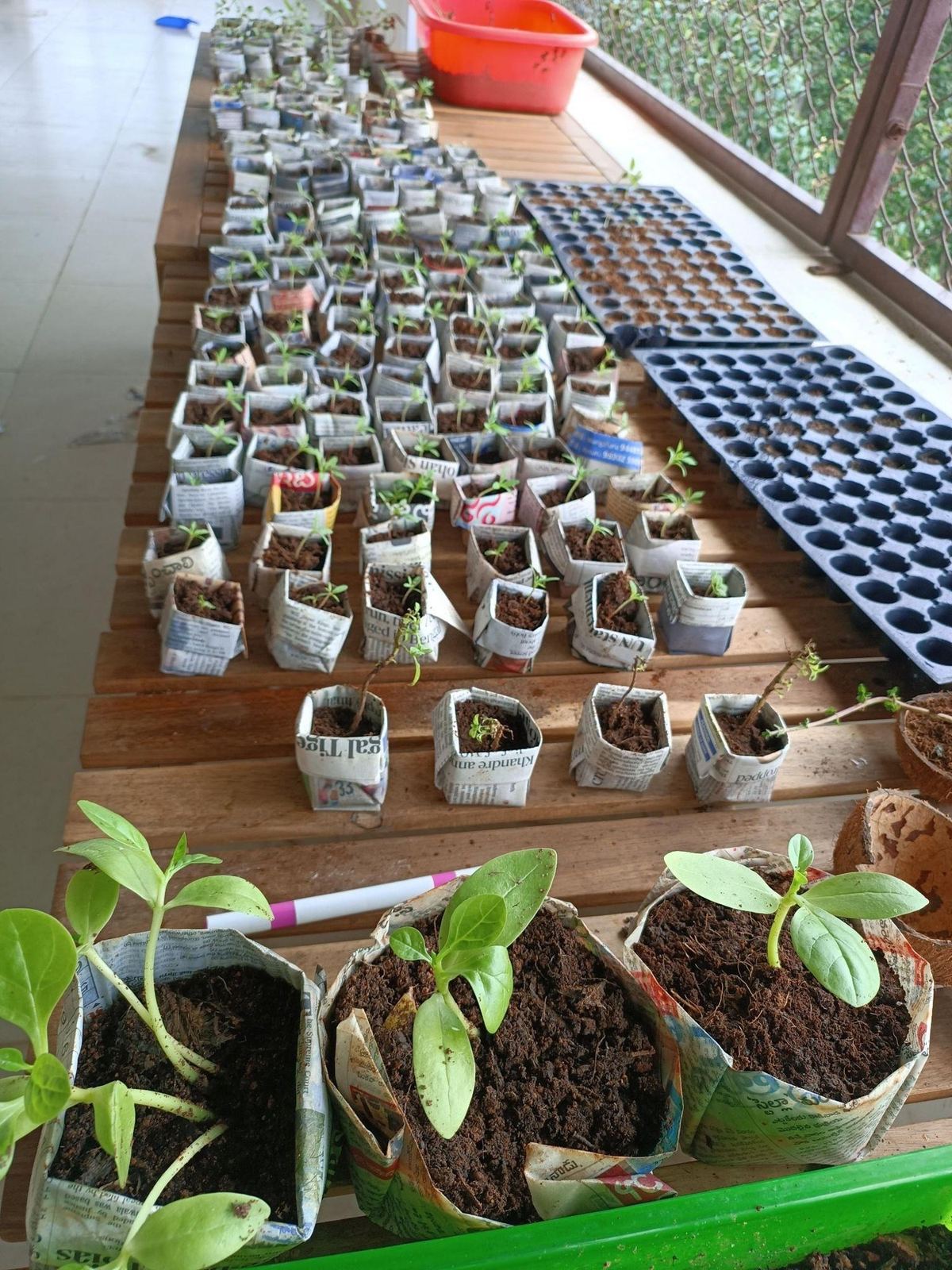
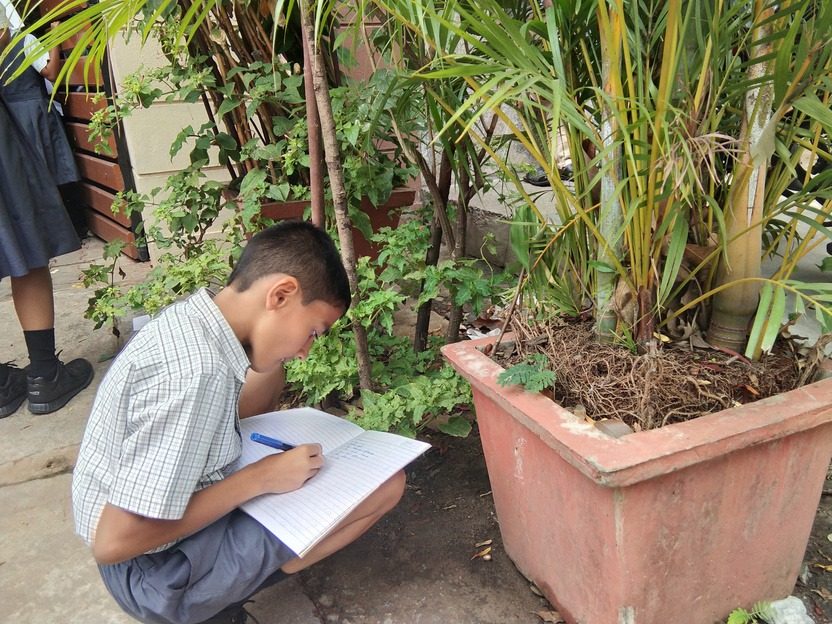
Children learn best when experience has made a place for the learning, concrete and abstraction hand in hand. A garden is such a place: an eco-experiment park with different plant and insect species, and an empty space to learn and experiment. It brings children close to the environment, makes them keen observers and actively engages them in learning.
Garden as a Learning Lab is our program for this. We design a garden for your space, bring an age-wise curriculum from Pre-K to Grade 8, give every child a garden journal, train your teachers, and stay alongside them through the year while the garden grows.
"If we are going to save environmentalism and the environment, we must also save an endangered indicator species: the child in nature."
Why gardens?
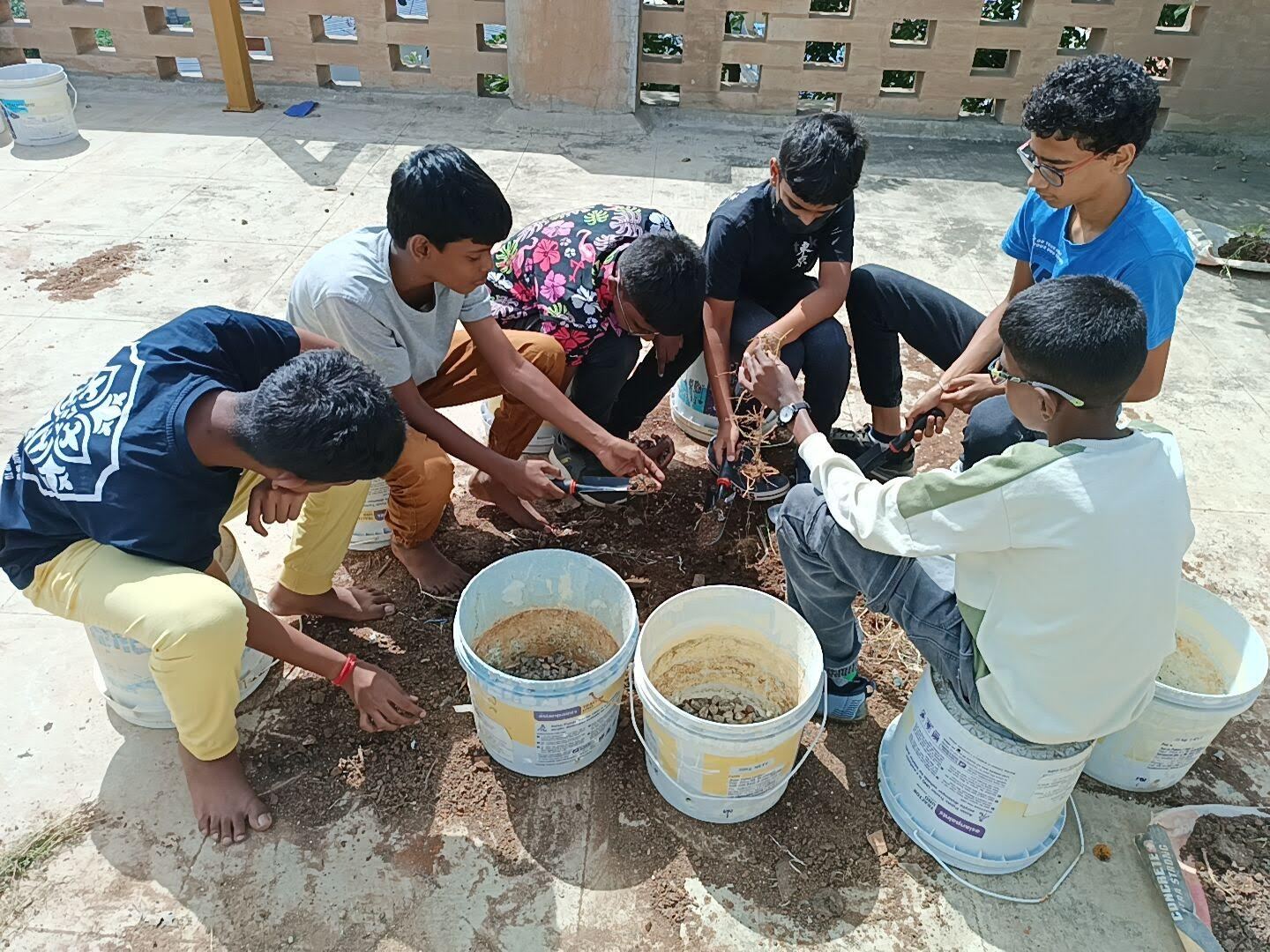
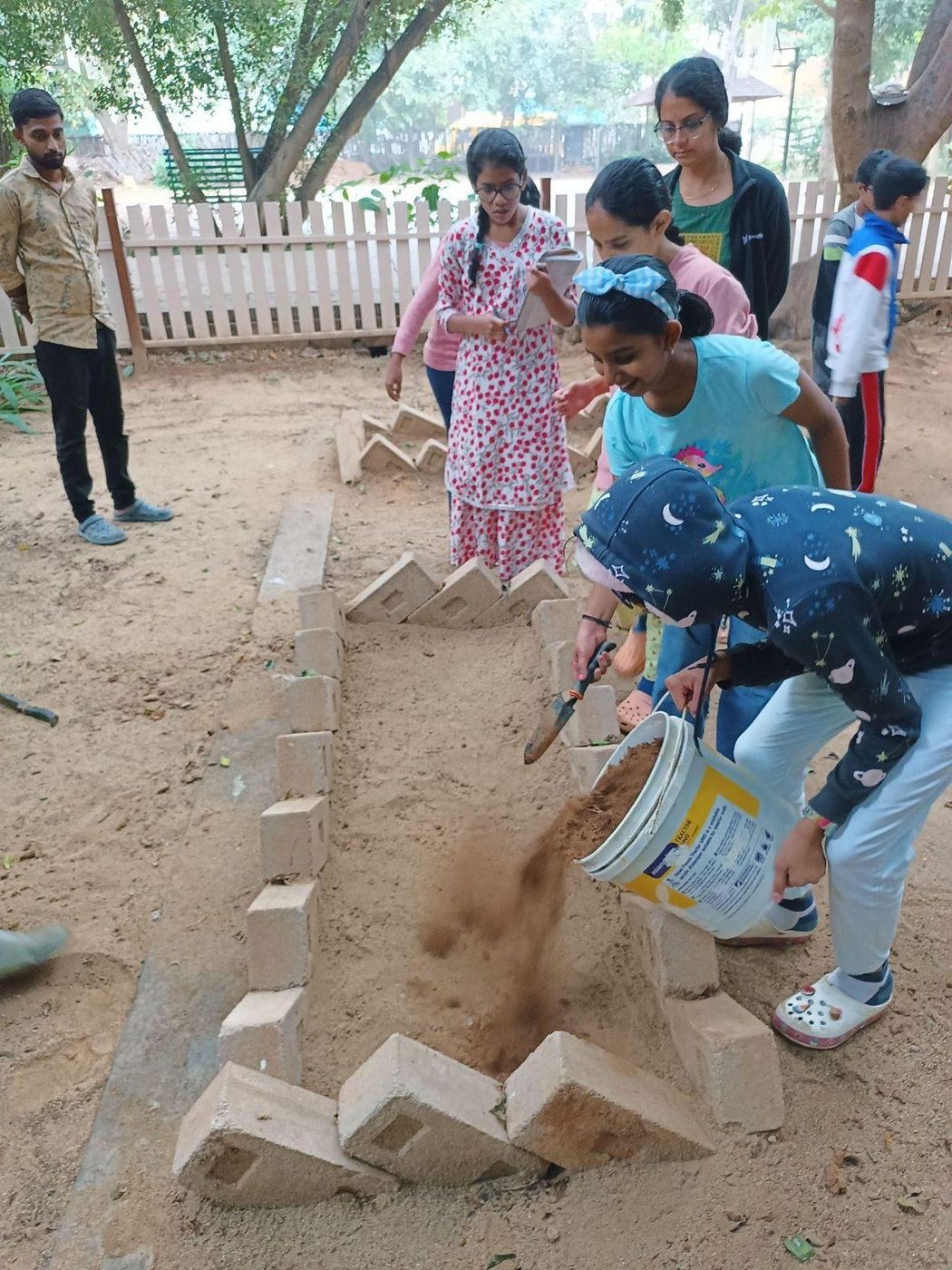
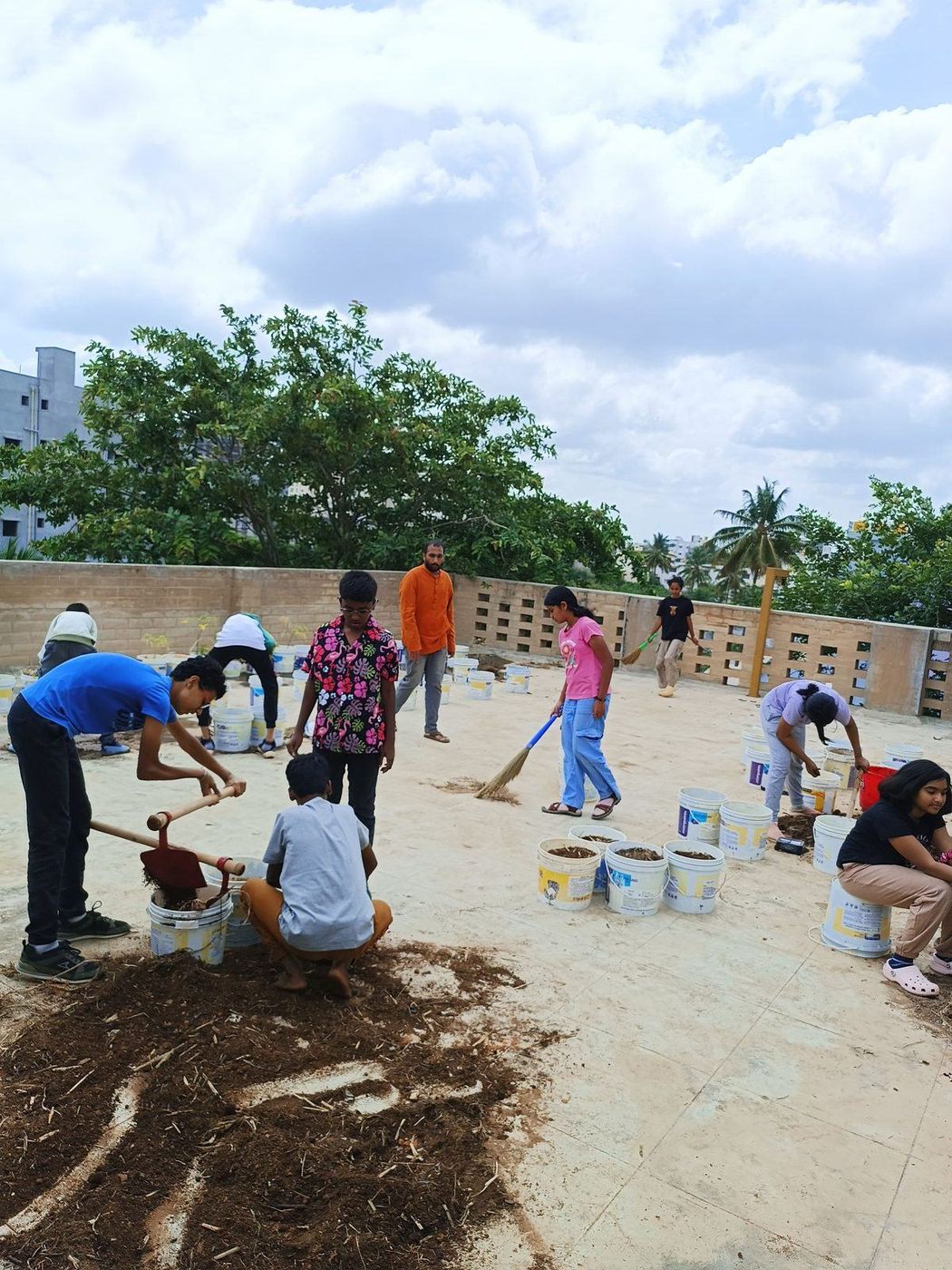
Gardens teach that real problems are messy, interdisciplinary, and rarely have clean answers. A forgotten watering schedule becomes a lesson in plant stress. A pest infestation opens up ecosystems, pesticides and trade-offs. Splitting the money from a harvest sale surfaces a real argument about fairness, one that children care about because the money is theirs.
Age 3
A three-year-old who will not touch vegetables at home plants her own radish seeds, waters them every morning, watches the green tops come through, and three weeks later pulls them up with muddy fingers. That afternoon they become mooli parathas. She asks for seconds.
Grade 6
Handed the challenge "grow 5 kg of potatoes in four months", a sixth grader researches varieties, calculates spacing, estimates timing, makes mistakes, and adjusts. The harvest becomes fries.
Grade 8
Eighth graders run a plant stall for Independence Day: they survey teachers on what to grow, price their seedlings, design plastic-free packaging out of newspaper, and invent a porter service for a customer who cannot carry four plants to her car. Revenue comes to 2.5 times expenses.
Our approach
Four commitments shape how the garden is run.
Concrete and abstraction, hand in hand
Children dig, plant, water, harvest, fail and succeed. We reflect on the learning as it happens.
Productive tension, not tidy resolution
"How should we split the money fairly?" is more valuable as a live debate than as a decision taken by the facilitator. The wrestling is the learning.
"Failure" as curriculum
When seeds do not germinate, plants bolt or pests devastate the garden, these are not disruptions to the program. They are the program. Resilience cannot be taught where success is guaranteed.
Slow time
In a world where food arrives in 10 minutes, waiting three months for potatoes is counter-cultural. It is training in patience and in the relationship between care and outcome.
How it works
The curriculum is a developmental arc from sensory discovery to running a real enterprise.
- Ages 2.5 to 4
Sensory Discovery and Care
Pre-K and Nursery. Exploring with all the senses and learning to tend living things. Counting seeds, petals and worms; soil as alive; pride in "my plant".
- Ages 4 to 6
Relationships and Cycles
Kindergarten. Plant to soil, sun to growth, insect to flower. Life cycles, measuring in handspans, sharing the harvest fairly.
- Ages 6 to 8
Where Does It Come From?
Grades 1 to 2. From seed to plate and waste to compost. Graphing growth, food chains, nature journals, tulsi, neem and aloe.
- Ages 8 to 10
Systems and Scientific Investigation
Grades 3 to 4. The garden as a system with inputs, outputs and feedback. Fair tests, soil pH, area and perimeter, trellises, seed saving.
- Ages 10 to 12
Design, Ecology, and Scale
Grades 5 to 6. The garden as a design problem. Germination rates, hydroponics, drip irrigation, soil chemistry, sustainability as practice.
- Ages 12 to 14
Production, Exchange, and Systems
Grades 7 to 8. From consumer to producer through a real enterprise: cost of production, pricing, break-even, and who decides what gets grown.
Every band works across numeracy, science and nature, language and literacy, and the social and emotional side of tending living things. Culture, engineering, ethics, economics and leadership join as children grow.
Interdisciplinary projects
Projects a school can choose from include the following, each adapted to the age group that takes it up.
Farm to Table
Grow the ingredients for a single meal, from seed to harvest to cooking.
The Market Stall
Plan, grow, price and sell: a real enterprise with real customers.
The Ecosystem Investigation
Survey the life in the garden and map the food webs that connect it.
The Engineering Challenge
Design and build the structures the garden needs: trellises, irrigation, compost systems.
The Pickle Project
Preservation, chemistry and family recipes, from harvest to jar.
The Butterfly Garden
Design planting for pollinators and watch an ecosystem arrive.
The Seed Library
Save, label and share seeds from one season to the next.
What your school receives
Seed2Sapling provides
- Garden design for your space
- Age-wise curriculum and student journals
- 2 full-day teacher training sessions through the year
- Fortnightly meetings with teachers for feedback and support
- Co-facilitation of selected sessions
- Materials set-up, including plant selection: butterfly garden, flowering, native and indigenous plants, herbal plants
- Complete lesson plans and an activity handbook, mapped by age band and subject
- One garden journal per grade level covered
- Fortnightly visits to support implementation
- Vacation homework resources for students around gardening
The school provides
- Garden space, and implementation of the garden design
- A program coordinator
- Timetabled garden periods for each participating class
- Teachers who join training and run sessions with our support
- Printing of the student journals
Putting it in place
The garden can be a timetabled session, a club, or both. One two-campus school runs it for Prep to Grade 3 with 13 sessions in Term I and 8 in Term II, per campus.
Space is less of a constraint than schools expect. Containers, a strip along a wall and a few grow bags are enough to start, and a school that begins small usually expands after the first harvest. Where the garden runs as a club, our student clubs give it a weekly home. For the youngest children it pairs naturally with our Early Years curriculum.
From the classroom
Let's talk about what your school needs
Partner with usAlso worth looking at: Student clubs · Early Years curriculum