STEM Discovery Lab, the composite science lab
A space to freely explore, investigate and create: an integrated composite science lab for grade school, Grades 3 to 8, built to the CBSE mandate, with curriculum-aligned investigations across six zones and teacher training on running a lab as inquiry.
What is the STEM Discovery Lab?
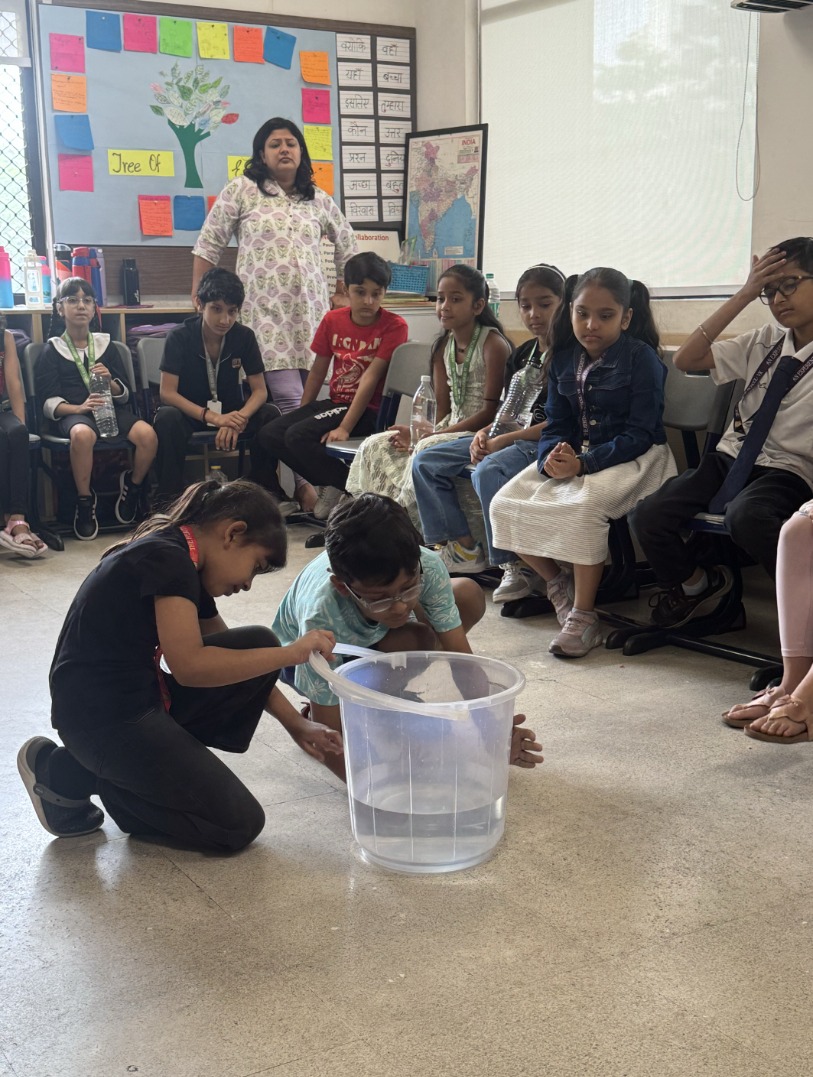
We believe children come to understand a complex concept when they have connected it to the world around them and tested it with their own hands. A lab, to us, is the room where that can happen: a space to freely explore, investigate and create, where a class can get an unexpected result and follow it.
The STEM Discovery Lab is our Primary Years Lab, designed for Grades 3 to 8, ages 9 to 14, with inquiry-based learning at its centre. In our proposals it also goes by the name STEAM Discovery Lab, because design and the arts sit inside it alongside science, technology, engineering and maths.
It is an integrated composite science lab, built to the CBSE mandate: physics, chemistry and biology work in one room, zoned so that each can run without the room being rebuilt between periods, and so that a group can leave an investigation set up. Around the science bench sit five more zones, for the environment, robotics and electronics, computational thinking, making, and maths.
Why a discovery lab?
Learning goes deepest when children are the ones producing the knowledge, through their own observation and experiment, with the teacher guiding the process. In a lab this means the result is not known before the child arrives. Children observe, hypothesise, test, measure and record, and when the outcome surprises them, the surprise is the beginning of the science.
The CBSE mandate has made composite labs common. Our work is to make the lab a place where the session is the chapter, and where children keep lab journals recording observations, data, reflection and conclusions, so that a teacher can see the reasoning and not only the result. The National Education Policy asks for education that is experiential, inquiry-driven and discovery-oriented.
How it works
The lab is built as six zones. Each has its own materials, and 15 detailed activities across the grade bands (Grades 3 to 4, 5 to 6 and 7 to 8), written to the curriculum rather than bought as a generic experiment set.
Science Investigation
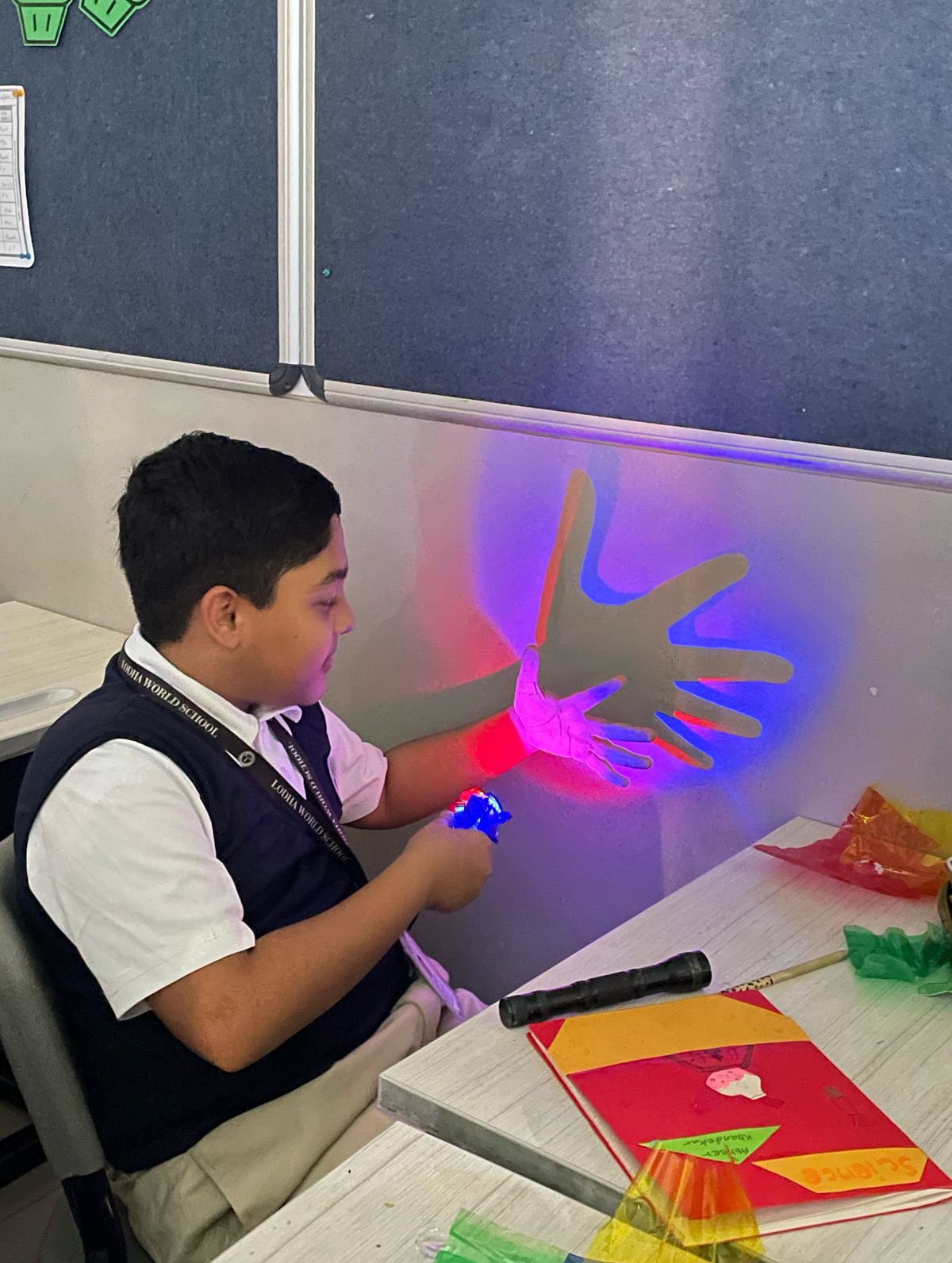
Students explore physics, chemistry and biology through experiments, models and guided investigations.
- Physics: forces and motion ramps, levers and pulleys
- Chemistry: dissolving, crystallisation, safe reactions
- Biology: plant systems, food tests, microbes
Environment and Sustainability
Ecosystems, climate, waste, water and soil through hands-on experiments and local field observations.
- Grades 3 to 4: water filtration models, leaf diversity study
- Grades 5 to 6: composting observation, air quality testing
- Grades 7 to 8: biodiversity survey, carbon footprint project
Robotics and Electronics
Students build and program robots and explore circuits, sensors and electronic components to understand how systems work.
- Grades 3 to 4: snap circuits, simple LED circuits
- Grades 5 to 6: series and parallel connections, buzzer alarms
- Grades 7 to 8: sensor-based robots, microcontroller projects
Computational and Algorithmic Thinking
Logic, sequencing, decomposition and coding concepts through unplugged and digital tasks.
- Grades 3 to 4: unplugged coding games, pattern grids
- Grades 5 to 6: Blockly and pictorial coding tasks
- Grades 7 to 8: algorithm design, flowcharts, conditional logic
Technology and Maker
Students design, build and prototype with engineering materials, tools and creative construction challenges.
- Grades 3 to 4: bridge building, catapult design
- Grades 5 to 6: hydraulic arm, marble run challenge
- Grades 7 to 8: gear systems, cardboard automata
Maths and Visual Reasoning
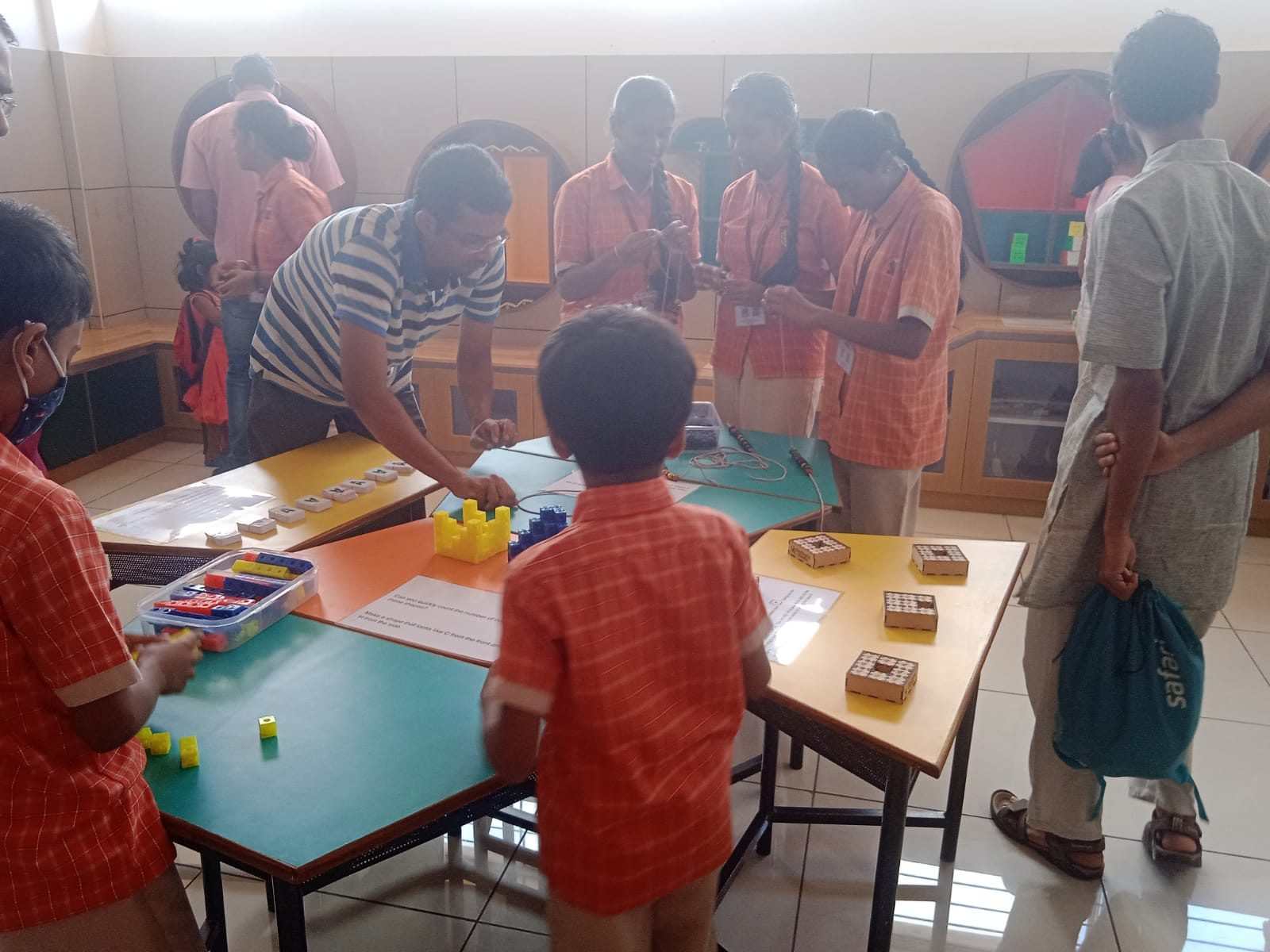
Number sense, geometry, patterns, puzzles and data skills through visual and tactile exploration.
Teachers receive experiment cards (15 to 20 per grade), safety guidelines and lab journaling templates for the science zone, and coding cards, robotics challenges, circuit diagrams and quick guides, engineering challenge cards, design cycle templates, eco-activity cards and field investigation templates for the others.
What your school receives
Seed2Sapling provides
- Lab space design, zoning and layout, and set-up of all six zones
- Science equipment, consumables and learning materials: all the materials and kits for the six zones
- Curriculum-aligned experiments, investigations and an activity handbook: 15 detailed activities for each zone across grade bands, with teacher support documents for each
- Student lab journals and worksheet templates: observations, data, reflection, conclusions
- Teacher training on inquiry-based and safe lab facilitation: an orientation, then 2 online meetings and day-long sessions through the year
- Implementation support and mentoring visits: 2 offline visits for audits, with round-the-year support
The school provides
- A room of about 1200 sq ft, with an open floor area and natural light
- Child-height shelves and storage, and a lockable cabinet
- Easy-to-clean flooring and a sink
- 2 to 3 low island tables, floor mats or cushions, and a small reading or movement corner
- Display boards: one soft board and one magnetic
- Power points and Wi-Fi, and basic ventilation
- A first-aid kit and safe edges
Putting it in place
The lab is scoped to the room, the grades and the equipment level. Schools building to the CBSE composite lab requirement usually take it as a single project; schools with an existing lab more often take the zoning, the investigations and the teacher training and keep the equipment they have.
Set-up runs from layout design through materials and zone set-up to the teacher orientation. For schools in Learn2Learn, the lab gives the science chapters a room of their own. Schools with foundation classes usually pair it with the Integrated Learning Studio for ages 3 to 8.
Let's talk about what your school needs
Partner with usAlso worth looking at: Tinker Den · Materials and kits