Not sure where your school fits? Start here.

Leadership

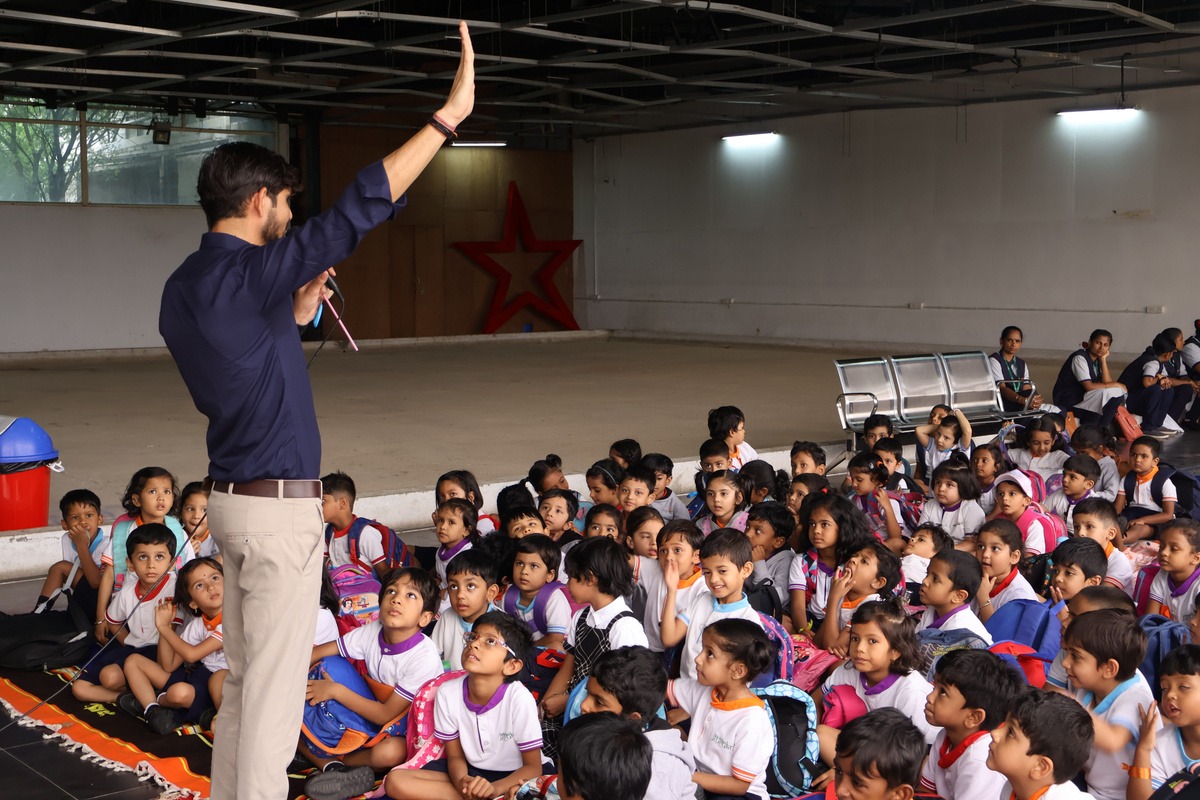
A facilitator addressing a hall of children and teachers

What changes in a classroom holds only when the school around it moves too. So we work with leadership as a journey of its own, in four parts. Each part can also be taken on its own.

The detailed page: Leadership: visioning, culture and impact.

With managementSet the direction

Visioning and goal setting

Two to four in-person sessions with management, principal, coordinators and heads. We align the school's vision with competency-driven pedagogy and assessment, agree what "working" looks like at six months and one year, and name the real constraints: timetable, resources, systems.

With the whole school and parentsBuild the culture

Mistake-friendly enabling culture

A classroom where a wrong answer is worth staying with needs a school that works the same way: observation and appraisal, staff meetings, timetable, what the school says about marks. Parents are part of it: one session on why their child is taught this way, and what changes on a report card.

With leadershipReview what changed

Impact tracking and review

Quarterly reviews with your leadership through the year, and a written end-of-year report: what was run, what changed in classrooms, what the baseline and endline assessment shows. Written for a management committee.

With the school officeBuild the systems

Teacher recruitment and onboarding

Competency-based tests and values-aligned interviews, so new teachers fit your pedagogy.

Admissions process redesign

Reasoning over recall, with observation-based tasks and children's work on show.

Talk to us about leadership

Teachers' mentoring

Illustration of two teachers in conversation

Teachers can bring inquiry into their classrooms only once they have experienced it for themselves. So teachers' mentoring also runs as a journey, in four parts. Each part can also be taken on its own.

The detailed page: Teachers' mentoring.

With teachersExperience the pedagogy

Dialogue on Learning: CPD workshops

Day-long workshops where teachers experience inquiry and discovery as learners first, then discuss how to carry it into their classrooms. Subject-wise or whole staff, 4 to 12 workshops a year. The most common starting point.

With teachersKnow where to start

Teachers' PCK competency assessment

A subject-by-subject picture of what your teachers know and can do, covering both halves of pedagogical content knowledge: the subject, and how children go wrong in it. Shows where each grade team is strong and where mentoring should start. Repeated at the end of the year, it also shows what changed.

With teachersGo deeper, chapter by chapter

Pedagogical mentoring and conceptual depth

Fortnightly subject and grade team meetings, every chapter discussed before it is taught: the concept at the teacher's own level first, then the misconceptions children bring to it.

With teachersBring it into the classroom

In-Classroom Learning and Reflection

Our facilitators observe classes in action and co-facilitate where it helps. Three facilitators with different subject expertise, four visits a year, five to six days a visit. Each visit ends with a review with your leadership.

Talk to us about teacher mentoring

Curriculum aligned resources

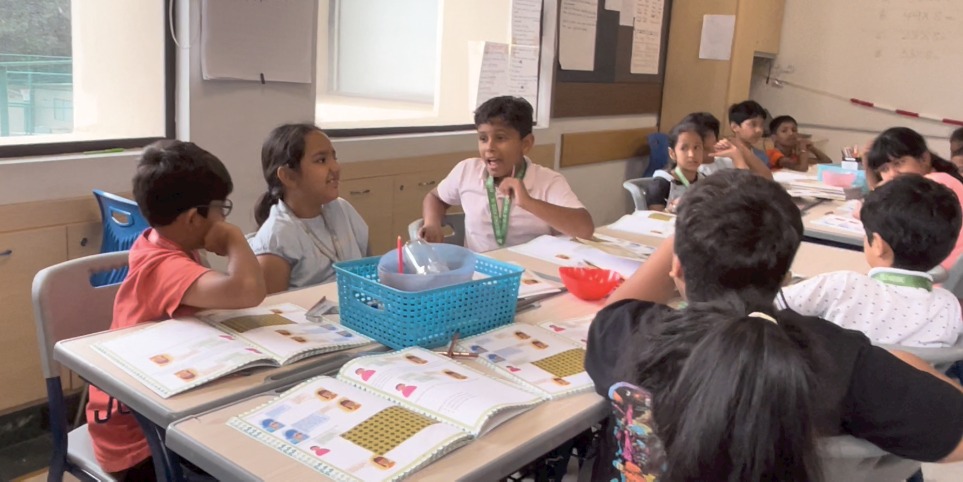
Children working with Anubhooti books in class

Resources for classrooms where children observe, question and build the concept for themselves, K-12. Discovery-based and inquiry-driven, and at the same time curriculum-oriented.

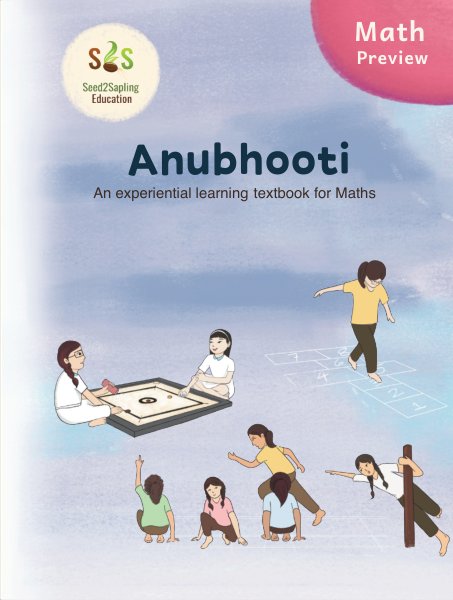
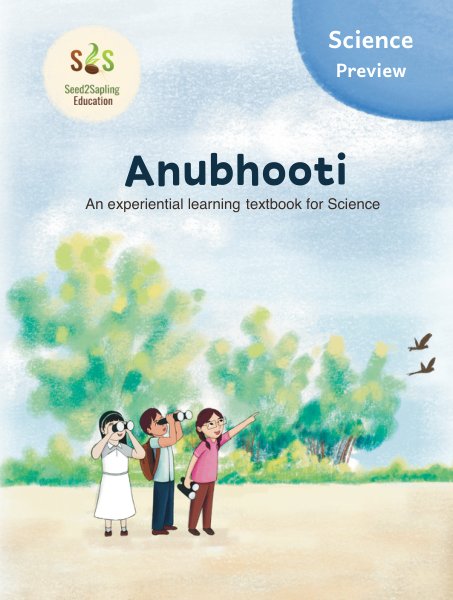
Cover of Anubhooti, an experiential learning textbook for Maths: children playing carrom and hopscotch Cover of Anubhooti, an experiential learning textbook for Science: three children watching birds with binoculars

Experiential learning textbooks

Our program name: Anubhooti

  • Inquiry-based textbook and workbook in one
  • Grades 1 to 5 in Maths and Science or EVS, Grades 1 to 2 in English
  • Every chapter opens with something to notice rather than something to memorise
  • Children observe, explore, discuss and then discover the concept

Ponderbook: pedagogy and assessment tool

Our program names: Ponderbooks and Pondersheets

  • Thought-provoking questions and inquiry-driven explorations for grade school in Maths and Science
  • Aligned to NCERT and ICSE, plus Pondersheets for other subjects
  • Works alongside whichever textbook your school already uses
  • The easiest place for a school to start

Exploratory materials and kits

  • 25 to 30 hands-on explorations per grade
  • Open-ended materials children can use more than one way, in the classroom and at home
  • Hearts-on, heads-on, hands-on: the kit serves the pedagogy

Interactive teacher resources

Our program name: the Nurture app

  • Our teacher-support app on web and mobile
  • Interactive classroom presentations a teacher can use in class, and complete teacher resources for every chapter
  • Competency-based assessment question bank, and materials lists for the activities to enable planning
  • Reflection prompts and a place for teachers to record what happened in the room

Complete Early Years curriculum, Nursery to UKG

  • A fully custom integrated curriculum, co-designed with your school
  • Literacy, numeracy, EVS, physical education and social and emotional learning
  • Themed workbooks, weekly planners and a reading program
  • Weekly online meetings to support teachers

Talk to us about books and curriculum

Student experience

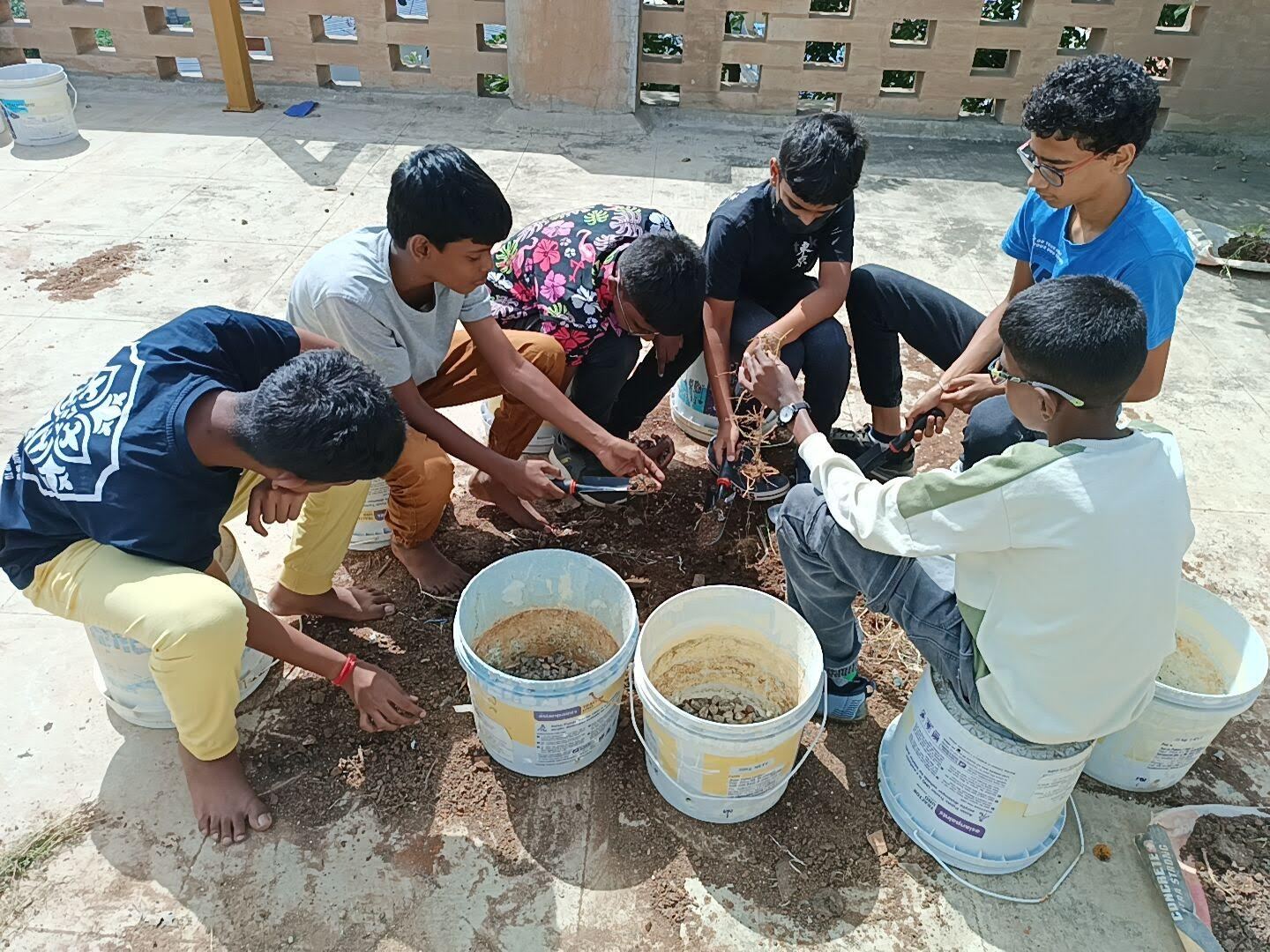
Children absorbed in a club activity

Children are naturally inquisitive. Clubs tap into that inquisitiveness outside the regular lesson, with themes explored from many perspectives and simple, easily available materials.

Student clubs

  • Possible themes: gardening, robotics, computational thinking and AI, maths and science tinkering, design thinking, paper explorations, kolams and rangolis, cooking, music, folktales, weather investigations, inquiry and research, creative reading and expression, and more
  • Run in your school, one afternoon at a time, hearts-on, heads-on and hands-on
  • Led by a facilitator who is not marking anything; teachers are welcome to observe

Talk to us about student clubs

Assessment strategies

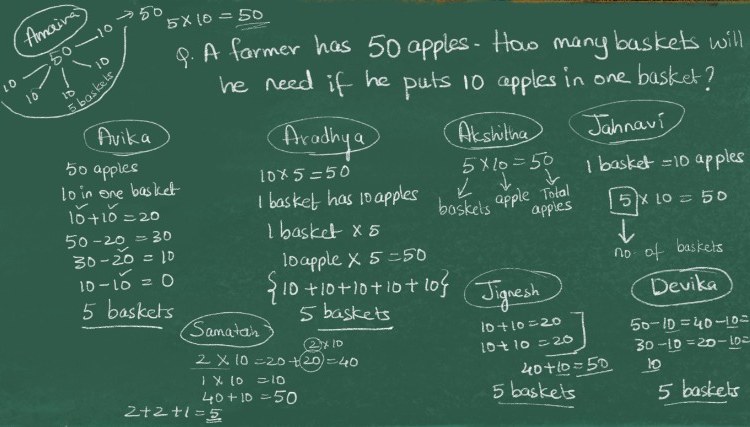
A child's reasoning written out on a worksheet

Assessment that shifts the focus from evaluating knowledge to evaluating skills: what a child understands and can apply, not only what they can recall.

Four named components, taken together or separately, on one page: Competency-based assessment support.

Competency-based question bank

  • A chapter-wise bank of competency-based questions
  • Mapped to your syllabus and to the competencies each chapter is meant to build
  • Delivered through the Nurture app, so a teacher draws on it while planning

Question paper review

  • We read the question papers your teachers have already written and co-design the next set with them
  • Which questions test recall, which test application, and what the paper as a whole measures
  • Often the moment a school sees the gap for itself

Baseline and endline assessment

  • A student assessment at the start of the year and the same one at the end
  • For the grades that adopt the program, so the change is measured rather than asserted
  • Reported by competency and by grade, not as a single mark

Holistic Progress Card design

  • A progress card that reports what a child can do, in a form a parent can read
  • Fits your existing formative and summative cycle rather than running beside it

Talk to us about assessment support

Learning spaces

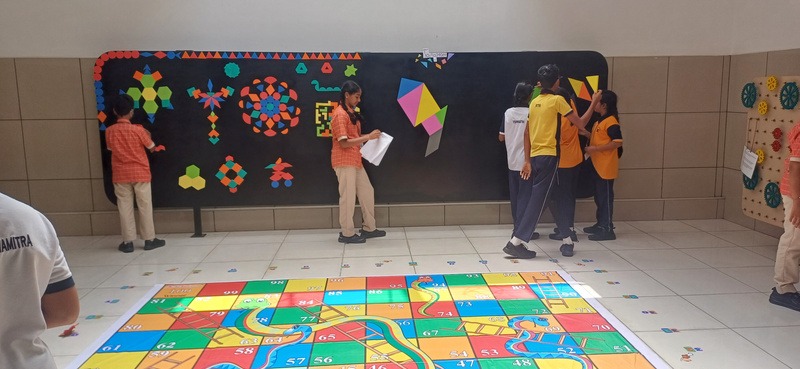
Children using a floor maths game in a learning space

One way to develop the attitude of exploration is by creating an environment that encourages it. Every space we set up is curriculum-integrated and teacher-owned: design, materials, learning triggers, lesson plans, teacher training and follow-up visits come together.

Math Lab

  • A space to take students through a stimulating process of mathematical thinking, through manipulatives, puzzles, strategy games and inquiry, built on your curriculum
  • 30 to 40 maths interactives that engage 40 students in groups
  • 80 to 100 activity lesson plans across age groups
  • Interior design and set-up, facilitator hiring and mentoring, four to five follow-up visits a year

Tinker Den

  • A space for open-ended collaborative exploration: to create, innovate and discover across science, arts and technology
  • Space design and materials, with a complete lesson plan and activity handbook
  • Hiring and training of facilitators, a full day of teacher orientation
  • Follow-ups through the year

Life-sized installations

The same ones we designed and built for Madlabs

  • Life-size interactive installations, indoors or outdoors
  • Children explore a phenomenon through touch, play and discovery
  • Space design and set-up, grade-wise learning objectives and activity plans
  • Teacher orientation at the school, and follow-ups to support their use

Garden Learning Lab

Our program name: Garden as a Learning Lab

  • Garden-based learning across ages and subjects, Pre-K to Grade 8, designed for Indian schools
  • Garden design, age-wise curriculum and student journals
  • Teacher training and co-facilitation of selected sessions
  • Fortnightly meetings with teachers for feedback and support

STEM Discovery Lab

  • An integrated composite science lab for hands-on learning, Grades 3 to 8, built to the CBSE mandate
  • Lab design and zoning, equipment and consumables
  • Curriculum-aligned investigations and student lab journals
  • Teacher training on inquiry-based and safe lab facilitation

Integrated Learning Studio, for Early Years

  • A foundation-years lab for sensory learning and creativity, Preschool to Grade 2
  • Six zones: life skills, count and play, curiosity lab, People and Places, language explorers, art and expression
  • Designed, equipped and set up by us, with regular follow-up for teachers

Talk to us about a learning space

Our signature program

Learn2Learn: Comprehensive School Partnership Program

For schools that resonate with this philosophy and want the whole of it, brought together into one multi-year program.

We acknowledge the time constraints of teachers and the support they need to bring a constructivist, student-centric experience into their classrooms. Through Learn2Learn we engage with everyone involved in a child's learning, within regular working hours and within the prescribed syllabus, so that classroom implementation by teachers happens smoothly and lasts.

Learn2Learn School Partnership Program: what teachers, students and the school and leadership each receive Dialogue on Learningworkshops PCK competencyassessment Fortnightlypedagogical mentoring In-classroom facilitationand reflection Nurture app resources forlesson planningand assessments Teachers Anubhooti textbooksor Ponderbooks Exploratory kits Competency-basedassessments,baseline and endline A joyfully challenginglearning! Students Visioning andgoal setting Mistake-friendlyenabling culture Parent engagement Impact trackingand review HolisticProgress Card School and leadership Learn2Learn School Partnership Program

Learn2Learn School Partnership Program

Teachers

  • Dialogue on Learning workshops
  • PCK competency assessment
  • Fortnightly pedagogical mentoring
  • In-classroom facilitation and reflection
  • Nurture app resources for lesson planning and assessments

Students

  • Anubhooti textbooks or Ponderbooks
  • Exploratory kits
  • Competency-based assessments, baseline and endline
  • A joyfully challenging learning!

School and leadership

  • Visioning and goal setting
  • Mistake-friendly enabling culture
  • Parent engagement
  • Impact tracking and review
  • Holistic Progress Card
What each group in the school receives through Learn2Learn.

Schools grow Learn2Learn over three to four years, scoped to their teacher numbers and grade bands. The full picture is on the Learn2Learn page.

"I can vouch for the immense changes that this team has brought, with their willingness to challenge traditional teaching and learning methods, and in the process have empowered both the teachers and the students. The technique of creating curiosity, questioning previously held beliefs and testing the accuracy of established truths through exciting but rigorous scientific and mathematical procedures has propelled both the teachers and students on a path of discovery."
Anita Manoj, Principal, Vidyaniketan School

Read about Learn2Learn Talk to us

Let's talk about how we can support your school.

Partner with us