
Tinker Den, the skills studio
A space for open-ended collaborative exploration: to create, innovate and discover. A flexible innovation studio for science, arts and technology, with the lesson plans, the facilitator and the training that keep it in use.
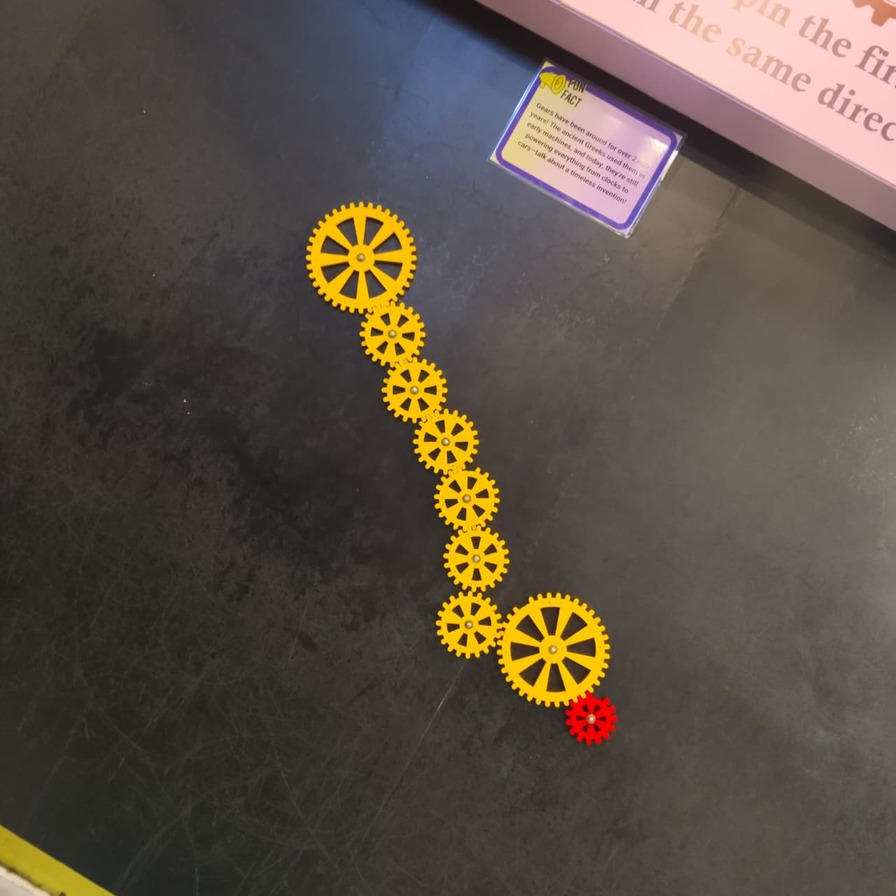
What is a Tinker Den?
We believe children learn to create, innovate and discover when they have a space for open-ended, collaborative exploration. A Tinker Den is built for exactly this: a space to freely explore, investigate and create, where children test innovative ideas, prototype solutions, break, make and test objects, and collaborate and learn. It is a fluid and flexible area stocked with both high-tech and low-tech things across fields, arts and technology, with a learning commons structured to encourage discussion.
Children observe, question, tinker and discover, and the focus is on the process followed, not the topic.
A room full of equipment is only the beginning. What makes a Tinker Den work is a person who owns it, a plan for the year, and someone to call in November when the first plan has run its course. So the Den comes with the hiring and training of its facilitator, a complete activity handbook written to the space you have, and follow-ups through the year that are about the facilitator's practice as much as about the equipment.
How it works
Six things make the space what it is.
Collaborative exploration spaces
A common working space with tables, to encourage discussion and working together as a team.
Art and technology zone
Low-tech and high-tech materials side by side: hand tools and card next to sensors, boards and a 3D printer, so that an idea can be tried in whatever medium it needs.
Learning triggers
Handouts with questions and outlines that trigger creativity, starting ideas and directions, and guidance that leaves the child room to find their own way.
Facilitated sessions, Class 1 to 8
Regular sessions run by the facilitator, following the activity handbook, in a timetabled slot or a club.
Mentoring projects
Children who want to take an idea further are mentored through it, from a first prototype to a working object, sometimes all the way to a competition.
Design and execution
Every project goes through design before it is built, and through testing after. Design thinking is the habit the Den is there to grow.
What children make there moves from simple to ambitious over the year.
Simple investigations
Spinning tops. Balancing toys. A stable truss bridge.
Art-integrated projects
Glow clothes. Cranky contraptions. Light and shadow play.
Tech play and real-world problems
An obstacle-sensing car. A greeting toy. A device that manages classroom noise. Two student projects have won national awards: an expandable food plate (IGNITE award) and a smart water dispenser (CSIR award).
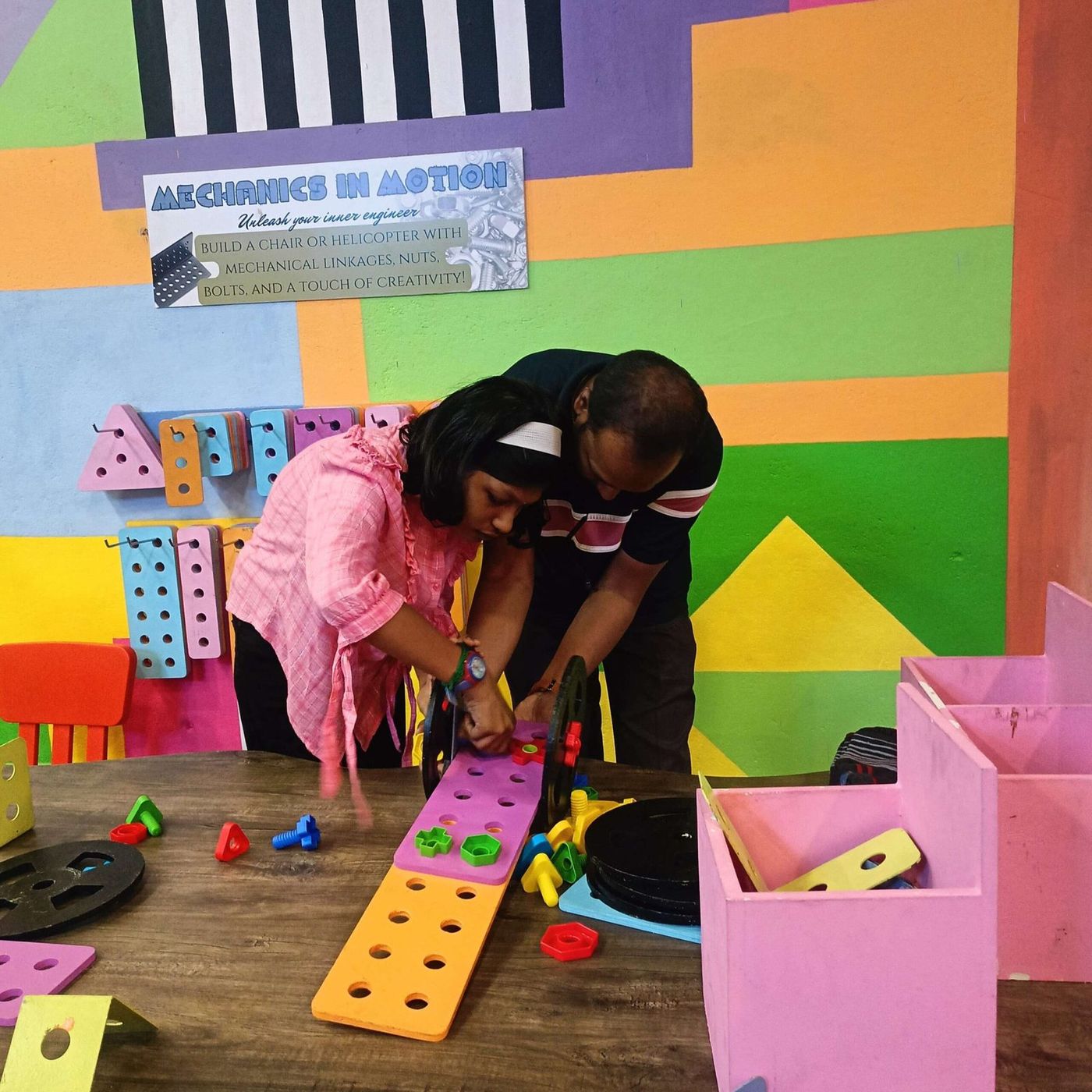
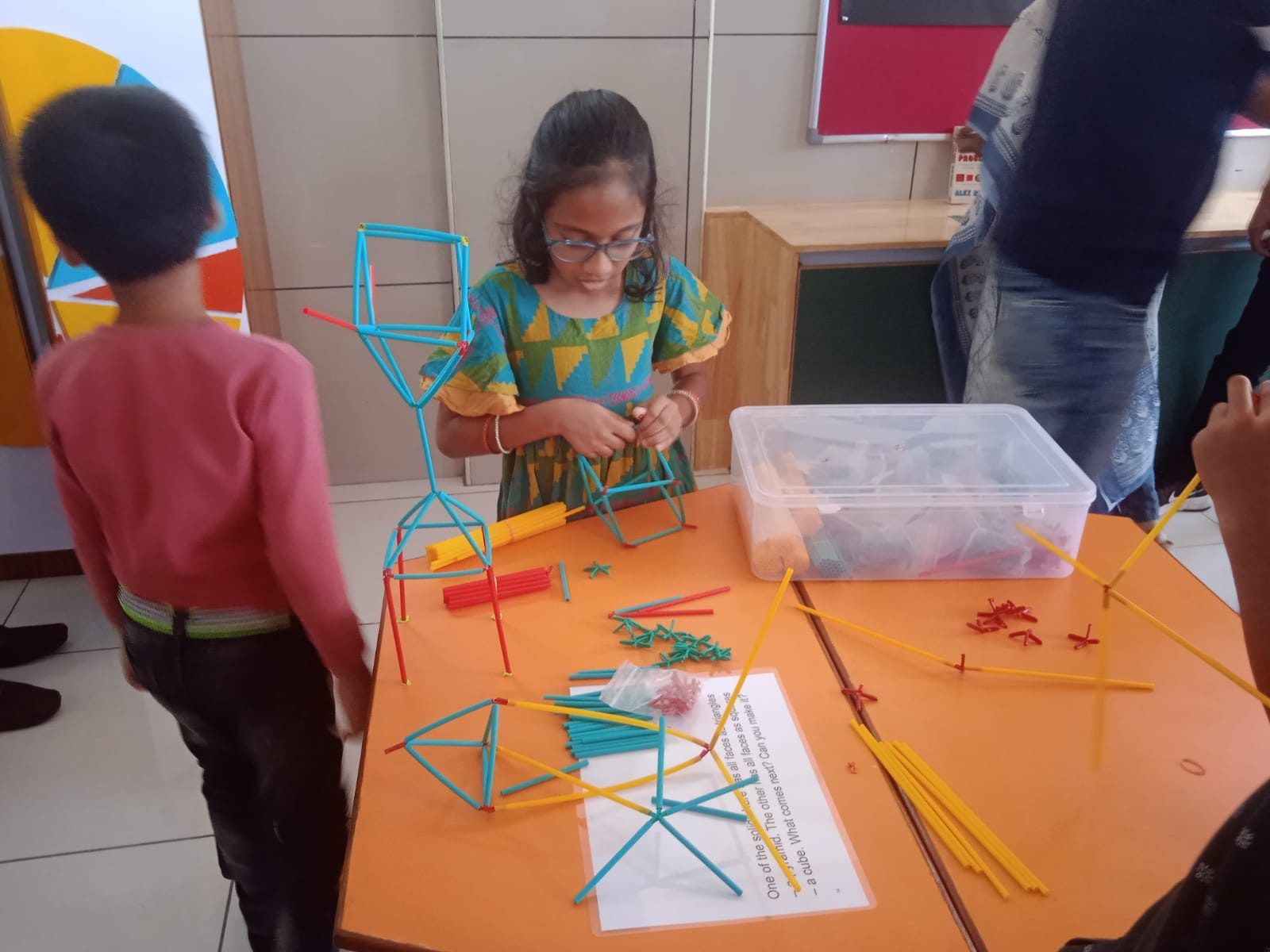
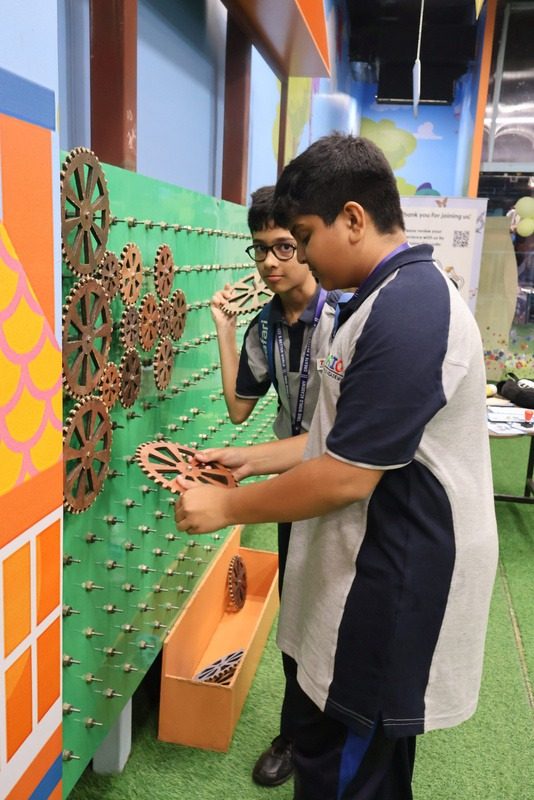
The tools and materials are the ones a working studio needs. Mechanical tools: hack saws, pliers, hammers, vice, clamps, Allen keys, a drilling machine, wrench and screwdriver sets. Electrical tools: wire stripper, oscilloscope, soldering kit, heat gun, digital multimeter. Electronic hardware development tools: Arduino boards, Raspberry Pi kits, ESP8266 boards, breadboards, resistor, capacitor and transistor sets, sensors, relays, stepper and servo motors, motor drivers, IR transmitters and receivers. Software: mechanical and electrical CAD, 2D CAD for laser cutting, 3D animation, virtual reality, digital painting and 3D printer software. Rapid prototyping: a 3D printer with filaments, and a laser cutting machine with acrylic and MDF sheets. The electronics and mechanical tools follow the list prescribed for Atal Tinkering Labs.
What your school receives
Seed2Sapling provides
- Space design and materials set-up
- The tools, electronics, software and rapid prototyping equipment listed above
- Complete lesson plans and an activity handbook, written to the space you have
- Hiring and training of facilitators after the space is set up, with mentoring and support through the year
- Learning triggers: handouts with questions and outlines, starting ideas and directions
- Ideas shared for each material, to promote creativity and design thinking
- A one-day teacher orientation program at your school
- 4 to 6 virtual follow-up sessions with teachers through the year
The school provides
- Workbenches
- Tool storage
- Model-making tools
- Electronic workstations
- Computers
- A facilitator to own the room, whom we help you find and train
- A timetabled slot for some grades and a club slot for the rest
We will also suggest our ideas for all of the above.
Putting it in place
Scope moves with the size of the space and the level of equipment, and is agreed first. Schools most often run the Den as a timetabled slot for some grades plus a tinkering club for the rest, which is what keeps the facilitator's week full and the room open. Our student clubs in robotics, tinkering and design thinking have a natural home here.
Schools with a dormant Atal Tinkering Lab are a common starting point. The equipment is usually already there; what is missing is the plan and the person, and that is the part we bring.
Teachers who watch the sessions and want the same way of working in their own classrooms usually go on to Dialogue on Learning.
Let's talk about what your school needs
Partner with usAlso worth looking at: Math Lab · Student clubs · Life-sized installations