Anubhooti: experiential learning textbooks
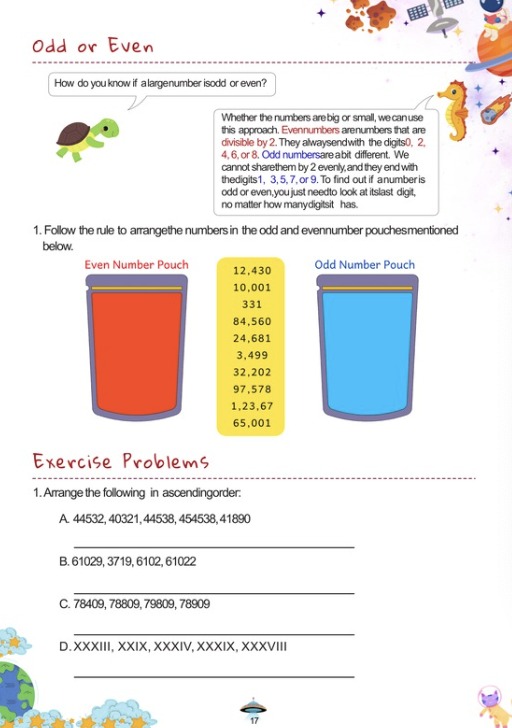
An inquiry-based textbook and workbook in one, for Grades 1 to 5 in Maths and Science or EVS and Grades 1 to 2 in English, where every chapter opens with something for children to observe, so that the concept arrives as the name for what they have already discovered.
What is Anubhooti?
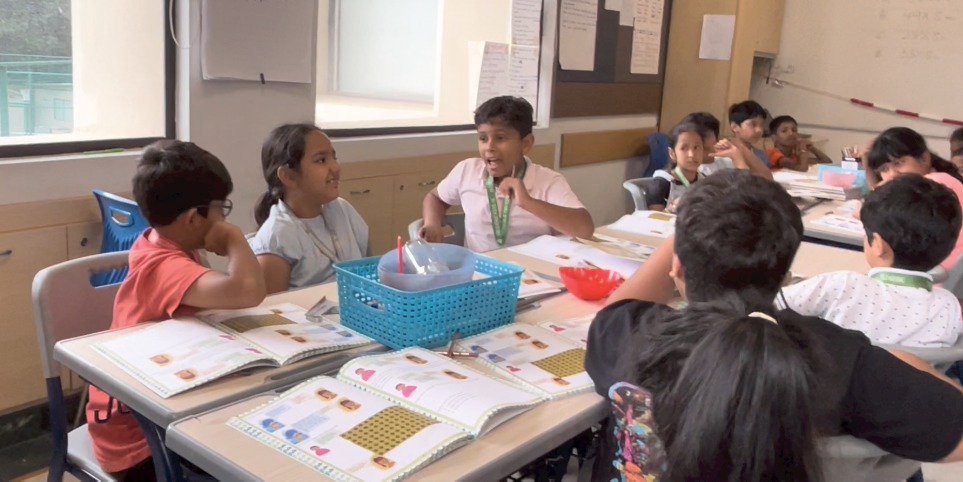
We at S2S believe that the role of education is to manifest the innate potential of every child, and the role of an educator is to provide a conducive environment. From this conviction comes an approach to learning that is discovery-based, inquiry-driven, and at the same time curriculum-oriented. When children construct their own knowledge through the tools of inquiry, learning is most effective and follows its natural process.
Anubhooti is that approach written into a textbook. It is a textbook and workbook in one volume, for Grades 1 to 5 in Maths and Science or EVS and Grades 1 to 2 in English, two term books a year, with teacher notes for every chapter.
Why Anubhooti?
A teacher wiped the blackboard with a wet cloth and asked where the water had gone. "It dried." Yes, but where did it go? Children went and looked behind the board. In another class, asked why droplets form on a glass of ice water, they said the water leaked out, the glass had holes, the ice was sweating. Several of them used the word condensation correctly and then drew pictures showing water seeping through the glass from the inside.
This is what children's thinking looks like before a concept has become theirs, and it is where real learning starts. When a textbook begins with the definition, children learn the word first and the understanding has to catch up later. We begin with the observation, and let the children's own questions carry the chapter.
The National Education Policy asks for education that is experiential, inquiry-driven, discovery-oriented, learner-centred and discussion-based, and for a shift in emphasis from "what to think" to "how to think". An Anubhooti chapter is built for exactly this, within the prescribed curriculum and the regular timetable.
How it works
Each chapter runs the same four moves: observe, explore, discuss, discover.
Observe
The structure on the page is Observe and Wonder. "I observe that the water is absorbed by the cloth." "I wonder where the water disappears by itself." Every child can notice something and ask something, and that entry point asks nothing of reading comprehension or recall.
Explore
Children work with what they have noticed: they tinker, test and try. In the condensation lesson above, the class spent 80 minutes hypothesising, building tests with opaque containers and sealed lids, failing, and refining.
Discuss
Children defend what they think from what they can see. A Grade 2 page shows footwear outside a temple and asks how many people are inside. The class shouts twelve, then someone spots the woman who has just taken her chappals off, then someone else argues about the man in the blue shirt. No single right answer is being fished for; the children are learning to reason from evidence.
Discover
The concept and its vocabulary arrive as the name for something the children have already seen. Defending a count from what you can see is the first step of grouping, which four years later is division. The same content can be told in a minute; the 80 minutes are what make it the child's own.
Illustrations do real work in the book: they carry the situation the class will reason about, as the temple page does.
The teacher's role changes with it. The teacher sets up the situation and holds the question open, which is the harder skill, and the reason the book always travels with teacher orientation and mentoring. Teacher notes sit alongside the child's pages: what children usually say at this point, which wrong answers are worth staying with, and what to do when the class arrives somewhere unexpected. A mistake-friendly classroom is built into the notes.
What your school receives
Seed2Sapling provides
- Anubhooti textbook and workbook in one volume, per child, per grade, two term books a year
- Grades 1 to 2: Maths, EVS and English. Grades 3 to 5: Maths and Science
- Teacher notes for every chapter, with the common misconceptions written out
- The matching experiential learning kit, 25 to 30 explorations per grade
- Nurture app access for every teacher: lesson planning, resources and a competency-based question bank
- Baseline and endline assessment for the grades that adopt it
- Teacher orientation before the year starts, and workshops through the year
The school provides
- Only an additional notebook per child. The textbook and workbook are the same volume
- Teachers' time for the orientation before the year starts and the workshops through the year
- Classrooms our facilitators can sit in, fortnightly, through the first term
- Coordinators who review the first set of question papers with us
Putting it in place
Schools do this three ways.
- Full adoption. Anubhooti replaces the existing Maths and Science or EVS textbook for Grades 1 to 5.
- Selected grades. The most common route. Start with Grades 1 to 3 and add a grade a year as teachers settle.
- Alongside your current textbook. Keep the book you have and use the Ponderbook and Pondersheet workbooks for the inquiry. This is the lightest way in, and many schools begin here.
For the subjects we do not publish, we curate books from other publishers that are closest to the same approach, so that one philosophy runs through the whole timetable.
In the first term we run teacher orientation, sit in classrooms fortnightly, and review the first set of question papers with your coordinators. Anubhooti is part of Learn2Learn, where the pedagogical mentoring, classroom visits and assessment support that make the book work come together.
From the classroom
"I used to think adults are better observers. Now I think children are much better observers. They tell us observations that are sometimes beyond our imagination."
Let's talk about what your school needs
Partner with usAlso worth looking at: Ponderbook: pedagogy and assessment tool · Exploratory materials and kits · Learn2Learn